Sarah K.
Ben and his team replaced our roof in Coventry and we could not be happier. Honest from the first quote, tidy every day, and the new slate looks brilliant. Highly recommend.
EPDM rubber and GRP fibreglass flat roofs across Warwickshire
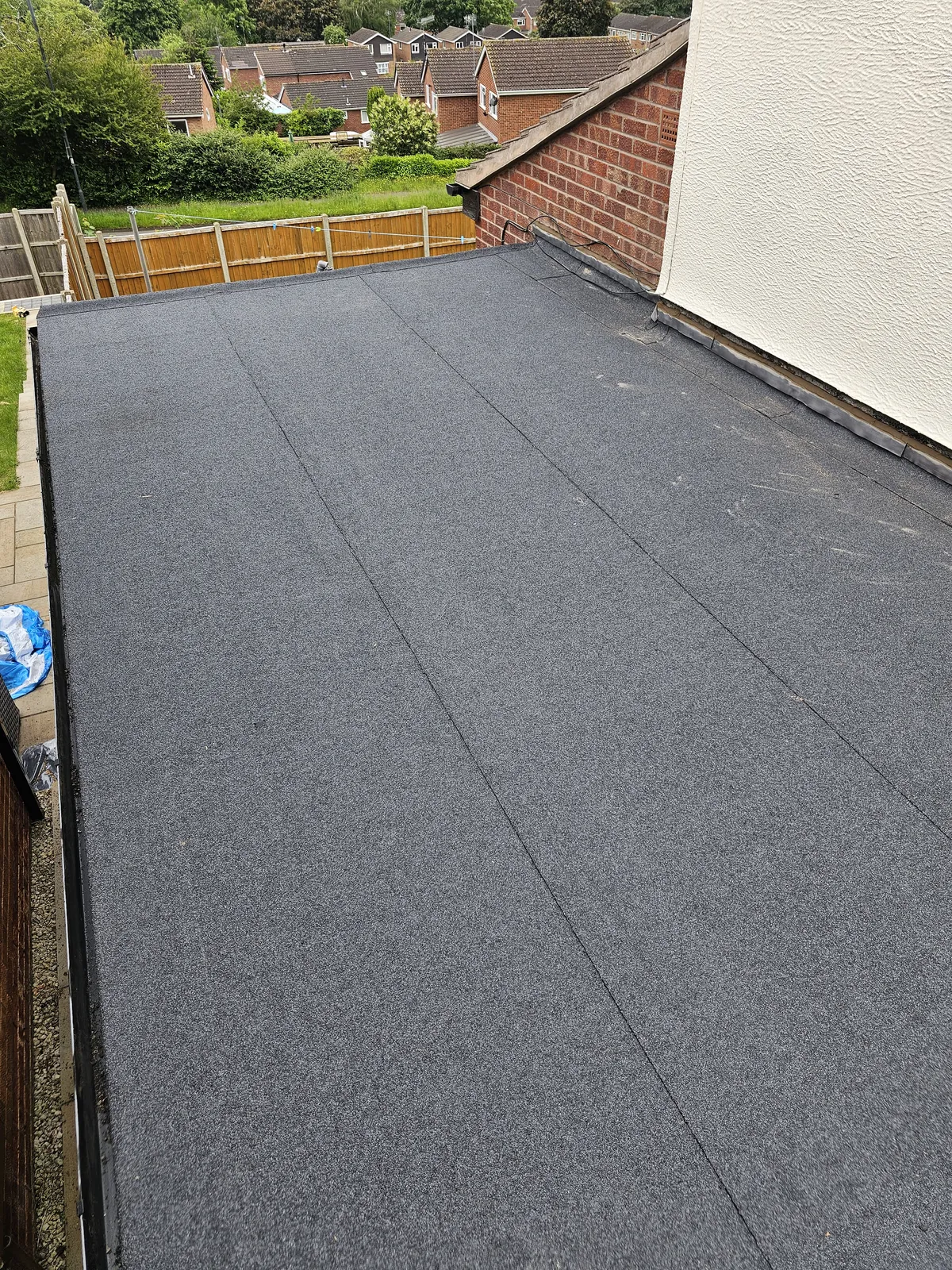
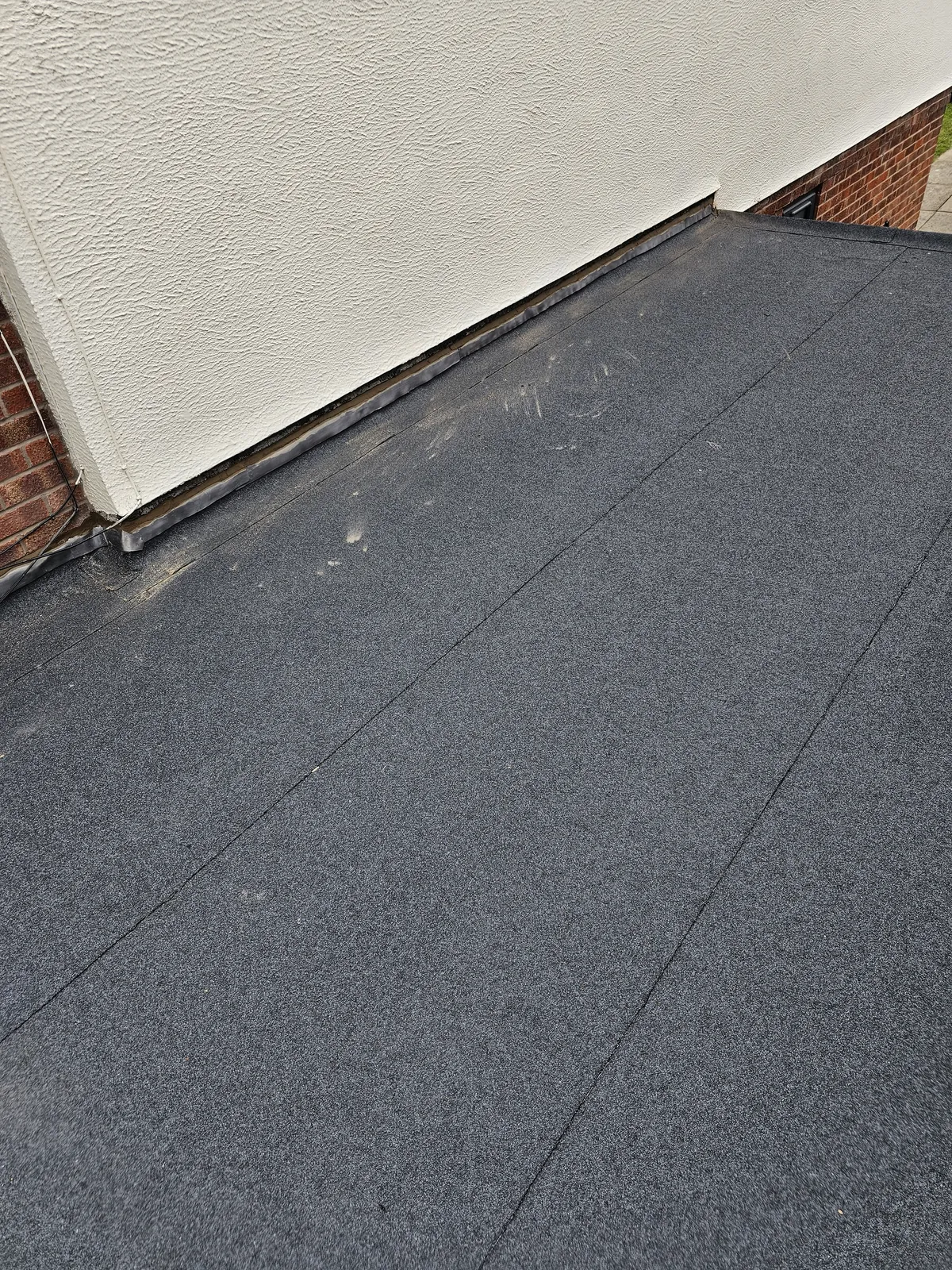
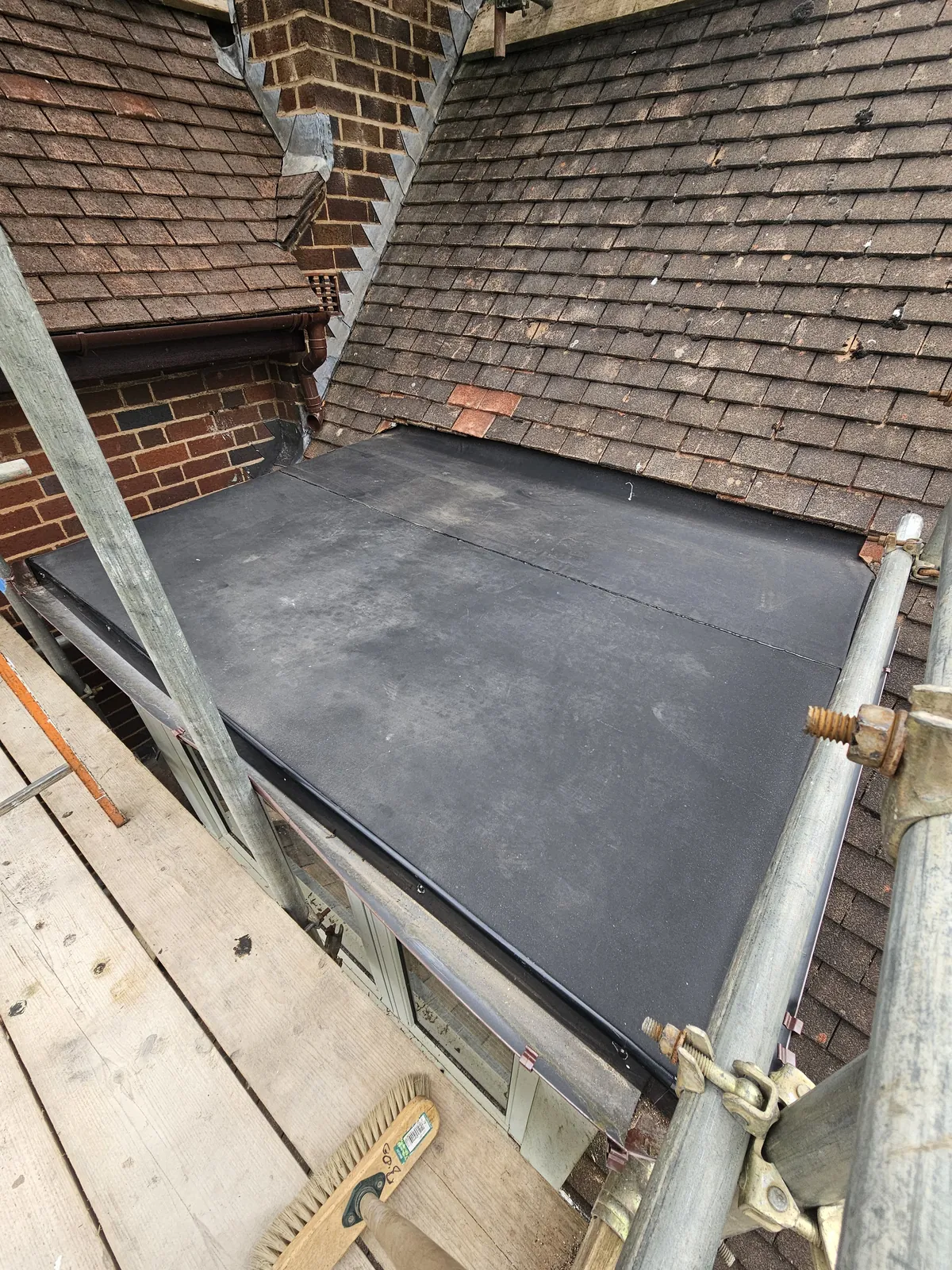
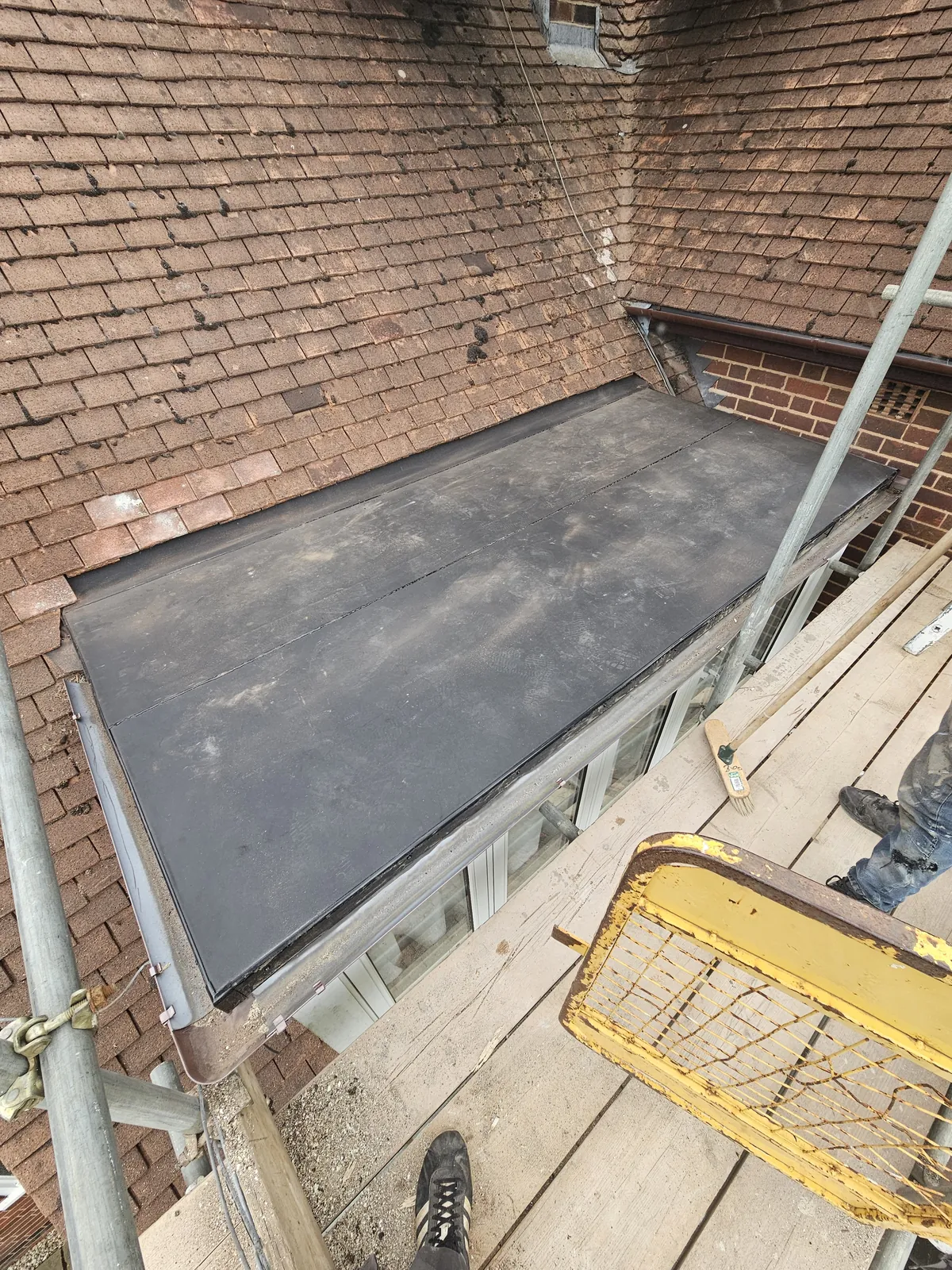
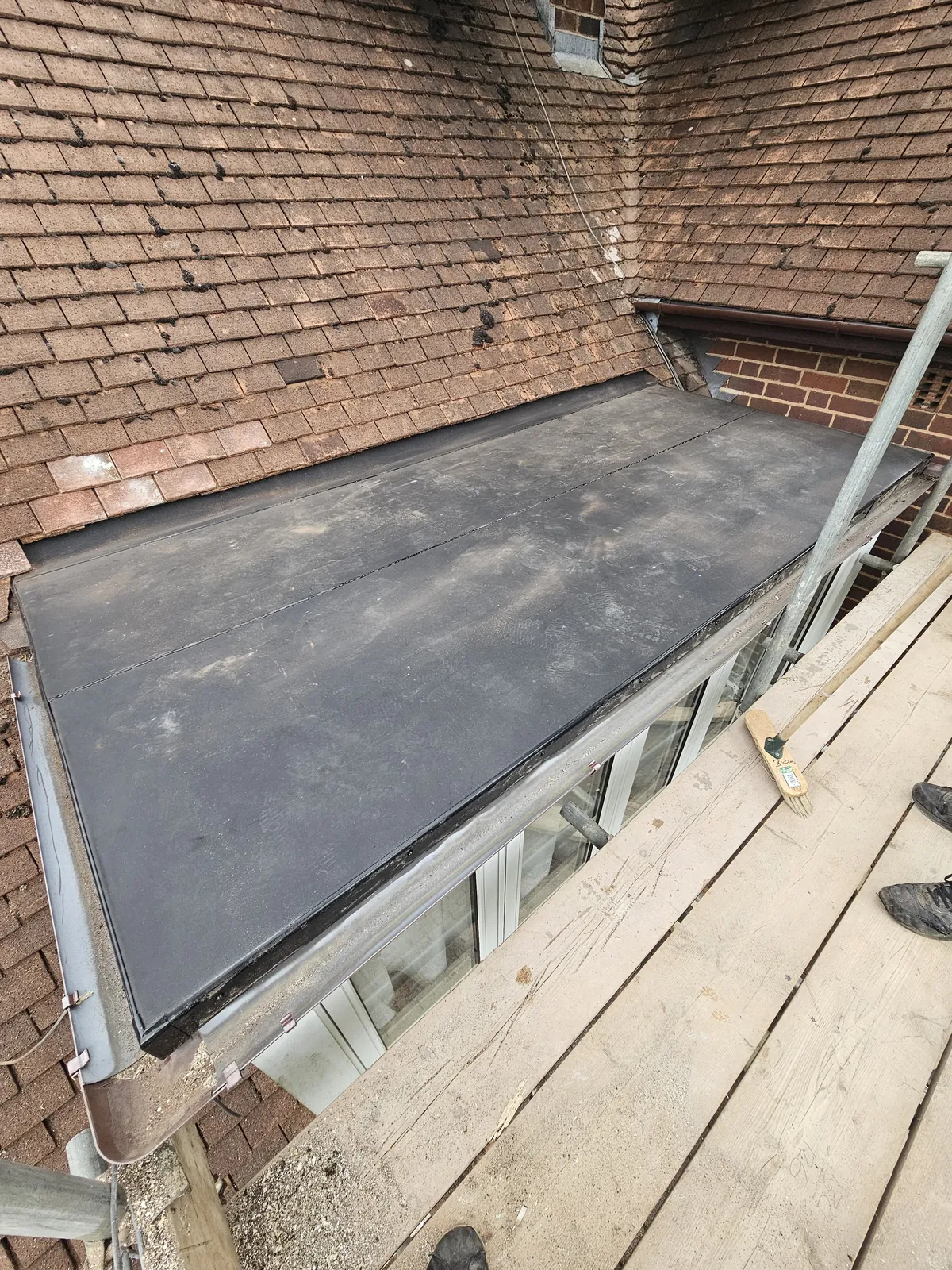
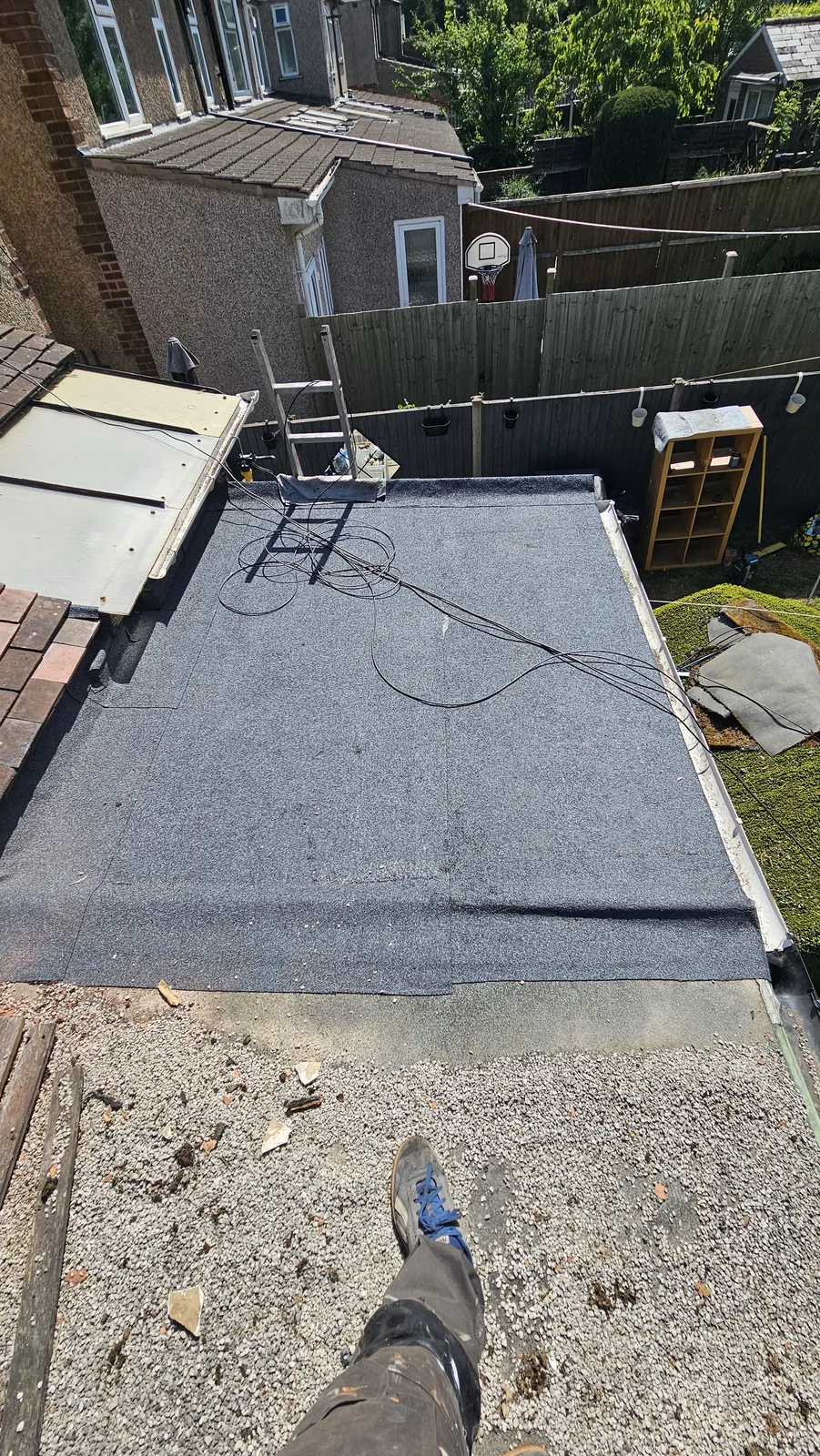
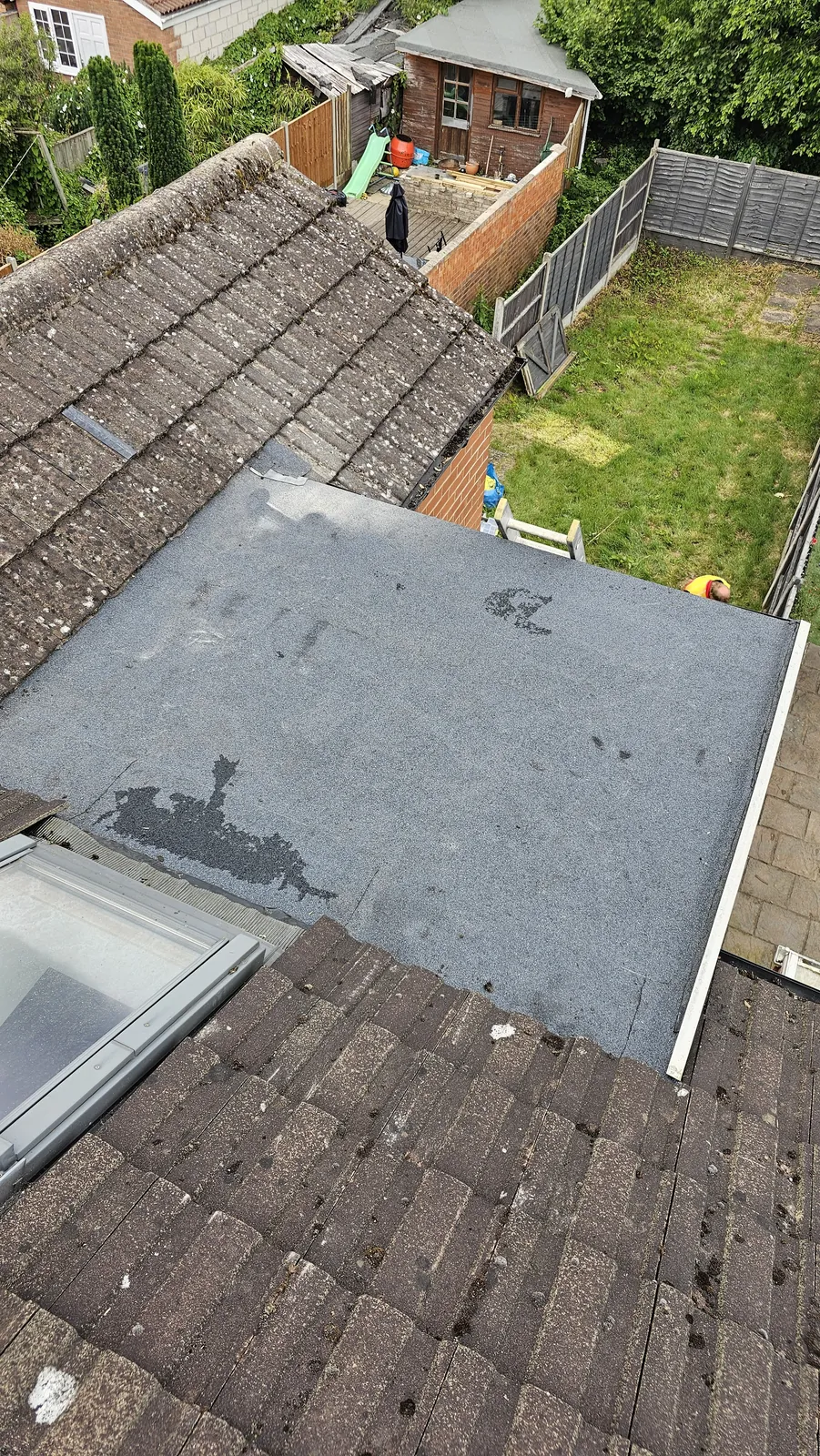
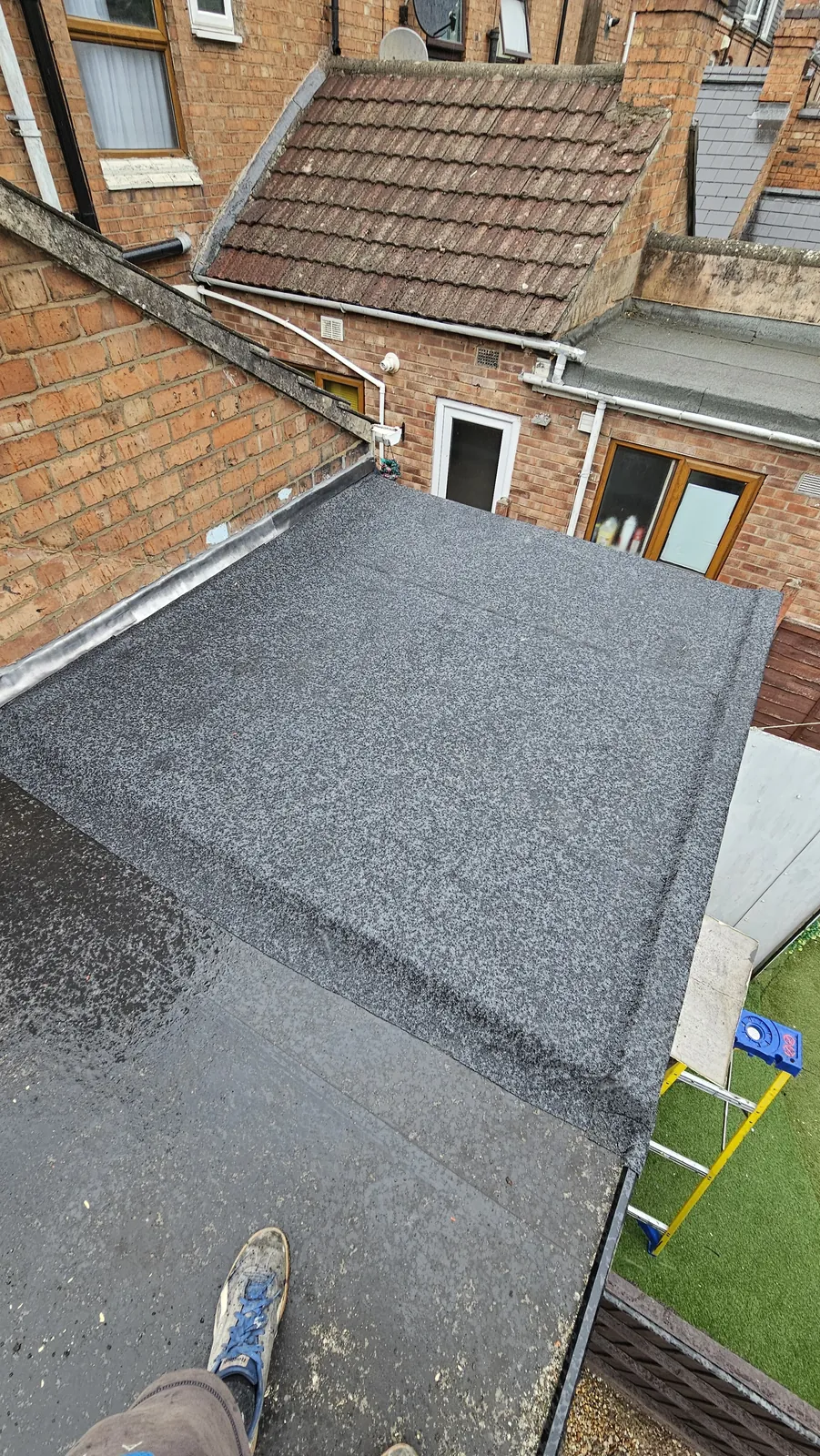
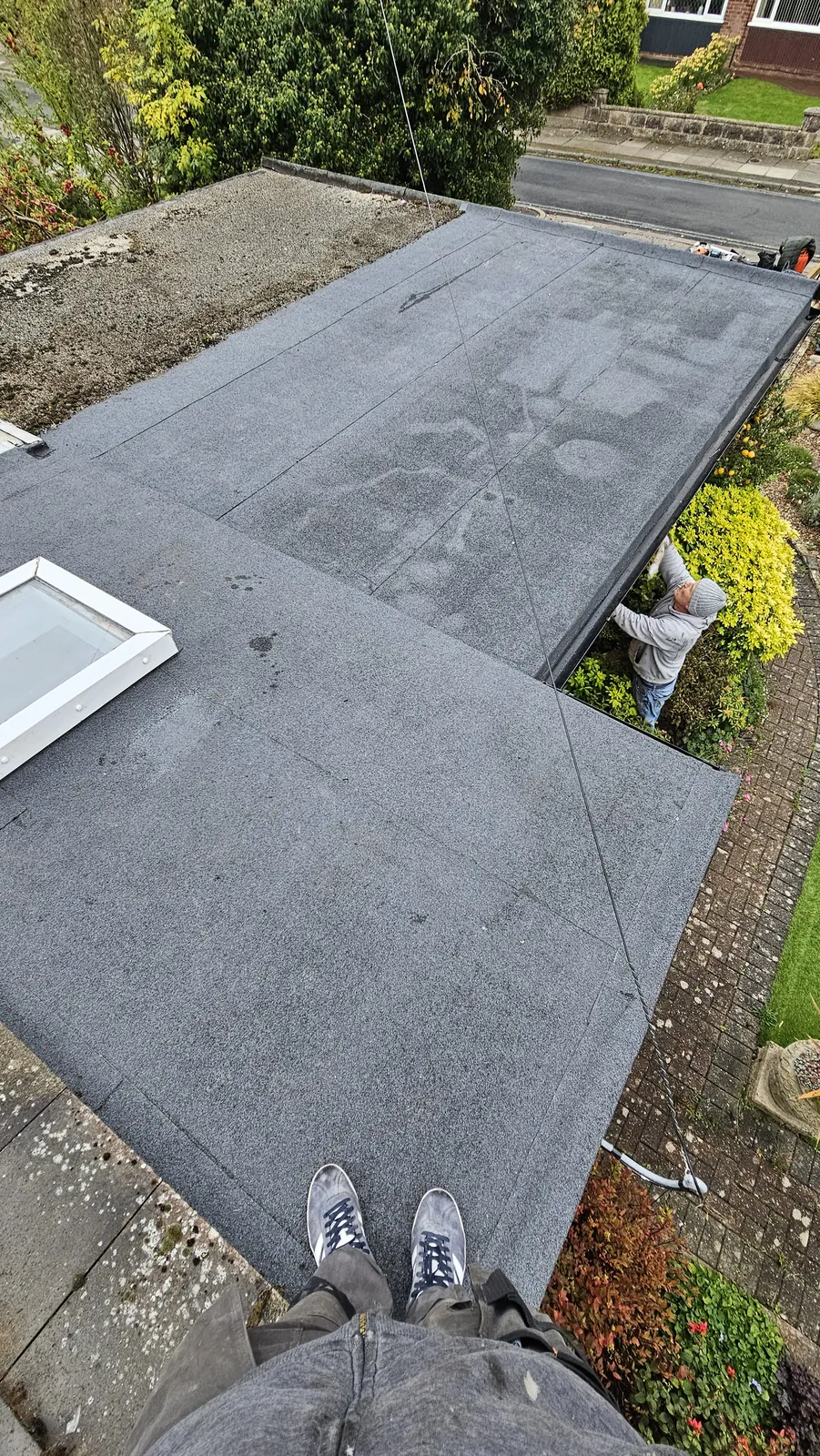
BM Roofing Specialist installs and repairs flat roofs across Coventry and Warwickshire using EPDM rubber, GRP fibreglass, and felt. Prices range from around £300 for a small repair up to £15,000 for a large new flat roof. EPDM rubber is our usual recommendation for standard roofs and comes with a 20-year guarantee; GRP fibreglass suits balconies and areas with foot traffic. Free quotes and 24-hour call-outs.
Flat roofs have come a long way from the old felt that cracked and blistered every few years. We fit modern EPDM rubber and GRP fibreglass systems that handle the weather, the cold, and the heat far better, and we will talk you through which one suits your roof rather than fitting the same thing on everything.
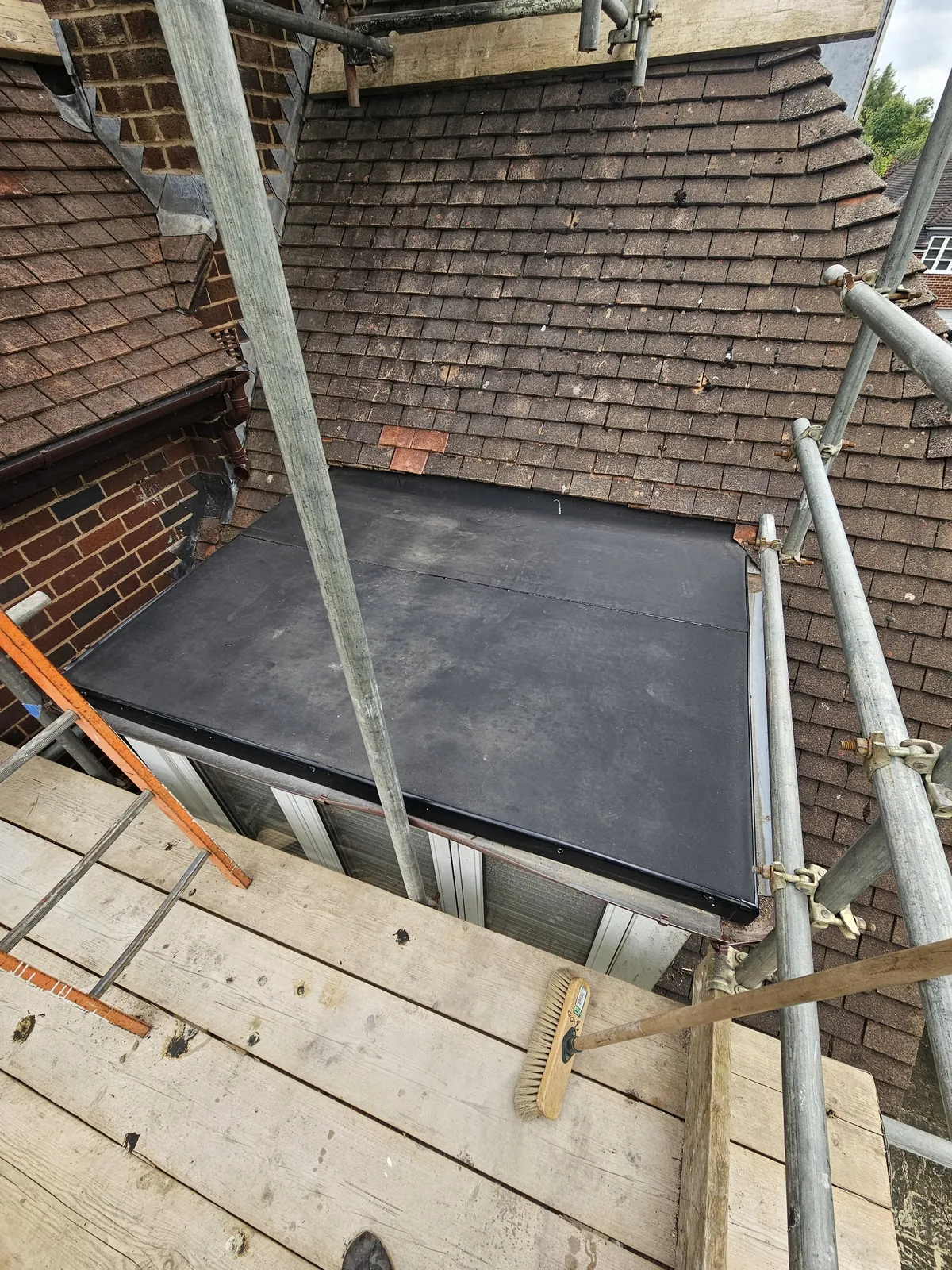
For a standard extension, garage, or dormer, EPDM rubber is what we usually recommend. It comes as a single seamless sheet so there are very few joins to fail, it does not crack under thermal movement, and it carries a 20-year guarantee on the rubber. It is a tidy, long-lasting answer for most homes.
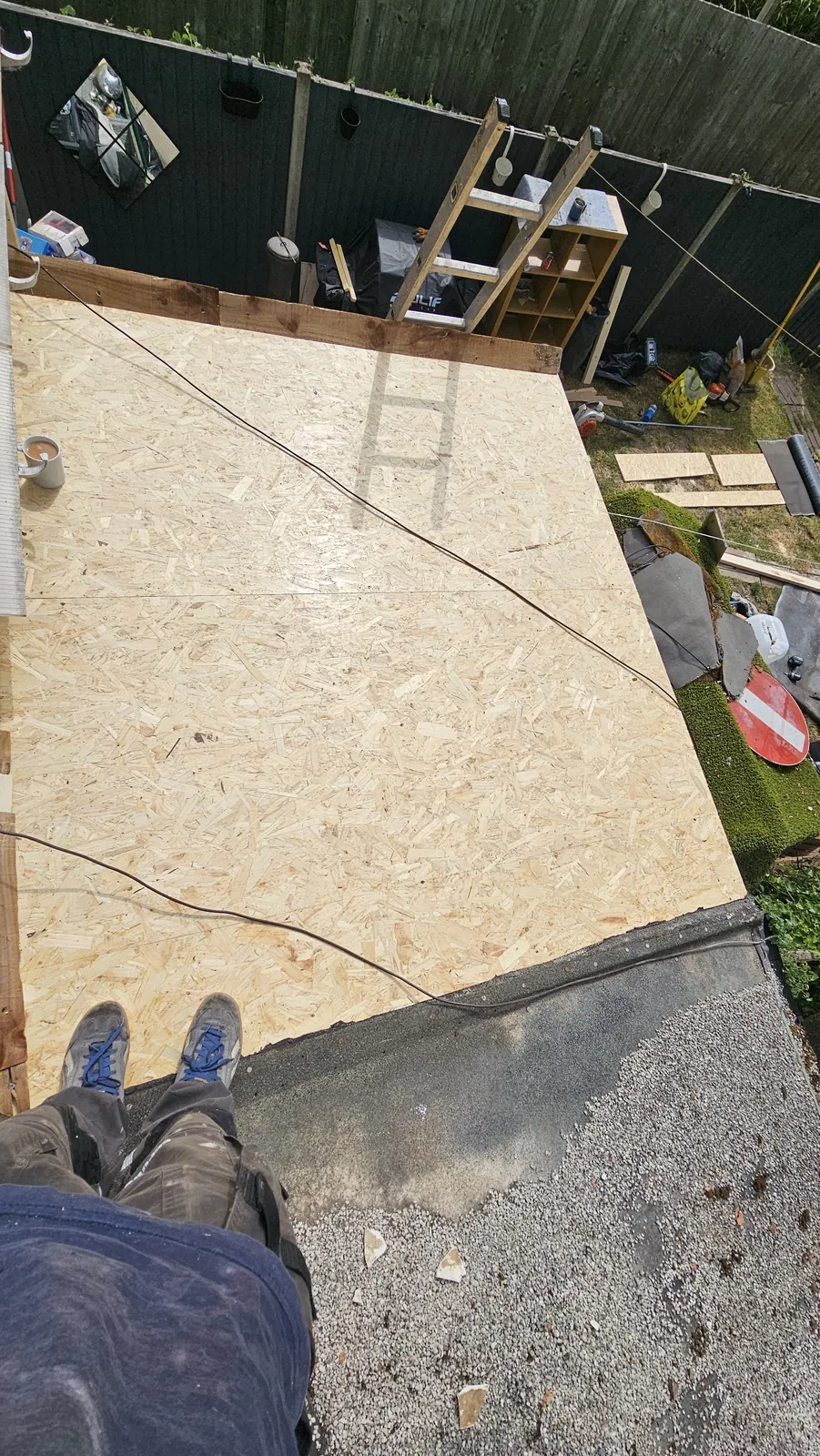
If the roof is going to see foot traffic, like a balcony or a roof terrace, GRP fibreglass is the better choice. It cures to a hard, walkable surface that takes the wear, and it can be finished in different colours. We prepare the deck properly first, because a flat roof is only ever as good as what sits underneath it.
Whether it is a small leak repair or a full new flat roof, we sort the falls so water runs away properly, dress the upstands and edges neatly, and leave you with a roof that will not need thinking about for years. Prices run from a few hundred pounds for a repair up to larger jobs, and you always get a clear quote first.
We are based in Coventry and cover the city plus the surrounding towns, including Nuneaton, Bedworth, Leamington Spa, Warwick, Kenilworth, Stratford-upon-Avon, Rugby, and Hinckley, roughly a 25-mile radius. If you are not sure whether you are in our area, give us a call on 07508 745125 and we will let you know.
Yes. We come out, take a proper look at the roof, and give you a free, no-obligation quote. We would rather take the time to price the job accurately than give you a rough guess over the phone that changes later.
Yes. We offer 24-hour call-outs for roofing emergencies such as storm damage or a sudden leak. We can get a temporary cover in place quickly to stop the water and protect your home, then return to carry out a permanent repair.
BM Roofing Specialist is run by Ben Mayers alongside his cousin Stephen. Ben has been roofing for 5 years and Stephen has over 40 years in the trade, so every job has decades of hands-on experience behind it.
We are a small, local outfit with low overheads, and we quote honestly. We tell you what a job actually needs, flag any extra costs like scaffolding or timber repairs up front, and never add surprises halfway through. Our saying is simple: building trust one roof at a time.
Always. We clear up as we go, take all the old materials and waste away with us, and leave your property as we found it. A tidy job is part of doing the work properly.
Scaffolding hire, old material disposal (skip hire), structural timber repairs, and the choice between budget concrete or premium slate.
A typical house re-roof takes a few days to around a week depending on the size of the roof, the access, and the weather. We will give you a realistic timescale with your quote so you can plan around it.
Yes, as standard. Breathable membrane lets the roof space ventilate and keeps condensation out of the timbers. It is something cheaper jobs sometimes skip, and it makes a real difference to how long the roof lasts.
Most basic repairs (fixing lead flashing, replacing a few tiles, or mortar work) take a couple of hours to a few days.
Yes. We track leaks down properly rather than guessing, because water often travels along the timbers before it shows on your ceiling. Finding the actual source means the repair fixes the problem instead of just moving it.
It depends on the age and condition of the roof. If it is sound and just has a few faults, a repair is the sensible, cheaper option. If it is near the end of its life and constantly failing, we will tell you honestly so you are not throwing money at patch repairs.
EPDM rubber is highly recommended for standard residential roofs because it does not crack under thermal movement. GRP fibreglass is best if the roof will experience heavy foot traffic (like a balcony). Rubber roofs come with a 20-year guarantee.
A properly fitted EPDM rubber roof comes with a 20-year guarantee and often lasts well beyond that. GRP fibreglass is similarly long-lived. Both are a big step up from the old felt that cracked and blistered every few years.
Often, yes. If the deck underneath is sound we can repair or re-cover the surface. If the deck has rotted, it is usually better value to replace the roof properly. We will tell you which makes sense after a look.
Standard lead flashing easily lasts 50 to 100+ years. It far outlasts modern plastic or rubber alternatives.
Anywhere a roof meets a wall or a chimney, in valleys, and along abutments. These are the spots where water most wants to get in, which is why traditional dressed lead is still the right material for the job.
Modern plastic and rubber flashing tapes are quick and cheap but they lift, crack, and fail far sooner. Hand-dressed lead, fitted with the correct code and laps, keeps water out for decades. It costs a little more and it is worth it.
High-quality modern uPVC systems require almost zero maintenance and come with structural and anti-discolouration guarantees lasting 20 to 25 years.
They close off and ventilate the roof and carry rainwater away from your walls. When they rot or sag, water gets into the brickwork and roof timbers, which leads to far more expensive damage. Sound rooflines protect the whole house.
Usually, yes. We can match the colour and profile of your existing runs, or replace the whole roofline for a consistent finish in white, black, or anthracite.
Traditional sand-and-cement mortar usually lasts 10 to 20 years before weathering, frost expansion, and natural building movement cause it to fracture.
Mainly the ridges and hips, the verges (the edge of the roof at a gable), and the chimney stack. On chimneys we also renew the flaunching, the mortar bed at the top that holds the pots in place.
Very much so. It is one of the cheapest bits of roof maintenance, and catching failed pointing early stops water getting into the roof and brickwork. Leaving it leads to a much bigger and more expensive repair.
If installed incorrectly, yes. Insulation traps heat below, making the roof space much colder. If you block the airflow at the eaves (where the roof meets the wall), moist air gets trapped, leading to wood rot. You must use rafter vents to keep airflow moving.
A well-insulated roof noticeably cuts heat loss and your heating bills, because a lot of warmth otherwise escapes straight up through the roof. The exact saving depends on your home, but it is one of the better-value improvements you can make.
It depends on your roof and how you use the space. Loft-level insulation is ideal for an unused loft, while rafter-level (warm roof) insulation suits a loft you want to keep usable. We will advise on the right type and depth for your situation.
Flaunching is the sloped mortar bed at the very top of the chimney stack that holds the chimney pots securely in place. If it cracks, rainwater will leak straight down the brickwork core and into your house walls.
It depends on the brickwork. If the stack is sound but the mortar and flaunching have failed, repointing and re-flaunching is usually enough. If the brickwork has gone soft or the stack is leaning, a partial or full rebuild is the safe option. We will tell you honestly which it needs.
The most common causes are cracked flaunching at the top, failed pointing in the stack, and worn lead flashing where the chimney meets the roof. We check all three and renew whatever is letting the water in.
No. While metal conducts electricity, a metal roof does not increase your risk of a lightning strike. In fact, because it is non-combustible, it is significantly safer than timber-framed or asphalt roofing if struck.
Garages, workshops, outbuildings, and industrial units are ideal. Metal sheet roofing is lightweight, durable, and quick to fit, which makes it a cost-effective choice for these kinds of buildings.
Yes. We can fit insulated sheet panels where the building needs to hold heat, such as a workshop or a converted outbuilding, so you get the durability of metal with better warmth retention.